
Canada already had a non-partisan process for choosing Governors General. Carney ignored it
There is a problem with choosing Louise Arbour as Governor General, and it is not Louise Arbour. The problem is in ignoring the independent advisory process meant to protect the office from partisan politics.
Arbour herself is plainly qualified on paper. A former Supreme Court justice, former chief prosecutor at The Hague, former UN High Commissioner for Human Rights, bilingual, and credentialed, she is clearly not Julie Payette.
Canadians remember how that appointment ended. Payette resigned in disgrace after a toxic workplace at Rideau Hall revealed how poorly she had been vetted.
After the Payette debacle, Canadians had reason to expect a more credible process for choosing future Governors General.
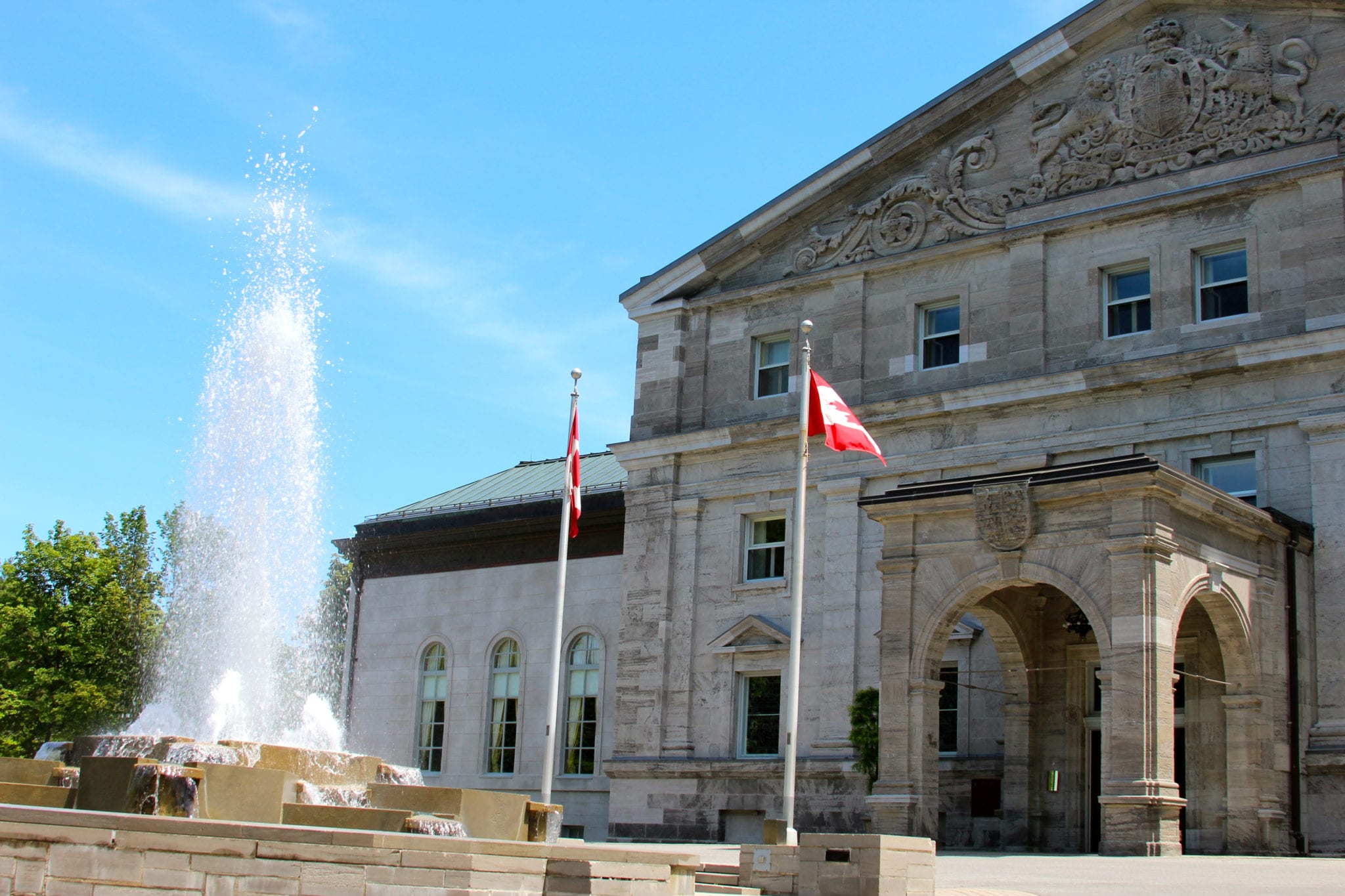
Instead, when Carney announced Arbour as Canada’s 31st Governor General on May 5, the Prime Minister’s Office offered no indication that any advisory committee had been consulted. This matters because a proven, non-partisan process for making this appointment already exists. Carney simply chose not to use it.
In 2010, Stephen Harper convened a consultation committee of constitutional scholars and historians to identify candidates for Governor General. The committee consulted more than 200 people, including premiers, former prime ministers and leaders of all parties, and produced a shortlist of three.
Harper chose David Johnston, who served seven distinguished years and was widely praised as one of the finest Governors General in living memory. In 2012, Harper formalized this into the permanent Advisory Committee on Vice-Regal Appointments, covering the Governor General, lieutenant governors and territorial commissioners. He viewed it as a first step toward a process “beyond the sole judgment of the prime minister of the day.”
Justin Trudeau killed that process. He selected Payette at whim, without contacting her past employers, and watched as she turned Rideau Hall into a workplace so hostile that 26 of 92 people interviewed used the word “toxic” to describe it.
Trudeau then assembled an ad hoc group co-chaired by a sitting cabinet minister to select Mary Simon, a diplomat who, after four years and 324 hours of French instruction, still cannot hold a basic conversation in one of Canada’s two official languages. The record since Harper’s committee went dormant is two-for-two: one disgrace, one disappointment.
Prime Minister Carney had the opportunity to break this pattern by restoring the committee. It required only a prime minister willing to constrain his own discretion for the good of the institution. That willingness is what distinguishes statesmanship from patronage. Carney, who campaigned on restoring trust in institutions, bypassed the very kind of process that builds it.
The result is an appointment that divides where it should unite. Arbour’s career in international human rights, her role developing the Global Compact for Migration, her criticisms of Israeli military conduct, and her dissents on the Supreme Court place her firmly on one side of questions dividing Canadians.
When asked at her announcement whether she considered herself a monarchist, Arbour replied that she did not really know what the term meant. A committee of constitutional experts looking for candidates who understood the Crown’s constitutional role would have noted that answer immediately.
None of this is to say Arbour lacks qualifications. It is to say that qualifications are not the only thing that matters. As the Crown’s representative in Canada, the Governor General must unify.
In a country fractured by regional grievances, linguistic strain and eroded institutional trust, the selection process itself is part of the message. A committee that consults broadly, that screens for temperament, constitutional literacy and genuine non-partisanship, tells Canadians that the appointment belongs to the country, not to the prime minister’s circle.
Harper understood this. He built the mechanism. It worked. Two prime ministers have now ignored it, and the office is weaker for it.
Dr. Marco Navarro-Génie is the Vice-President of Research and Policy at the Frontier Centre for Public Policy. An expert on radical revolutionary movements and political identity, he is a recipient of the King Charles III Coronation Medal for exemplary public service. He is the author of three books, including the 2023 release Canada’s COVID: The Story of a Pandemic Moral Panic, co-authored with Barry Cooper.
Explore more on Federal politics, Monarchy, Liberal government
The views, opinions, and positions expressed by our columnists and contributors are solely their own and do not necessarily reflect those of our publication.
Troy Media empowers Canadian community news outlets by providing independent, insightful analysis and commentary. Our mission is to support local media in helping Canadians stay informed and engaged by delivering reliable content that strengthens community connections and deepens understanding across the country.

